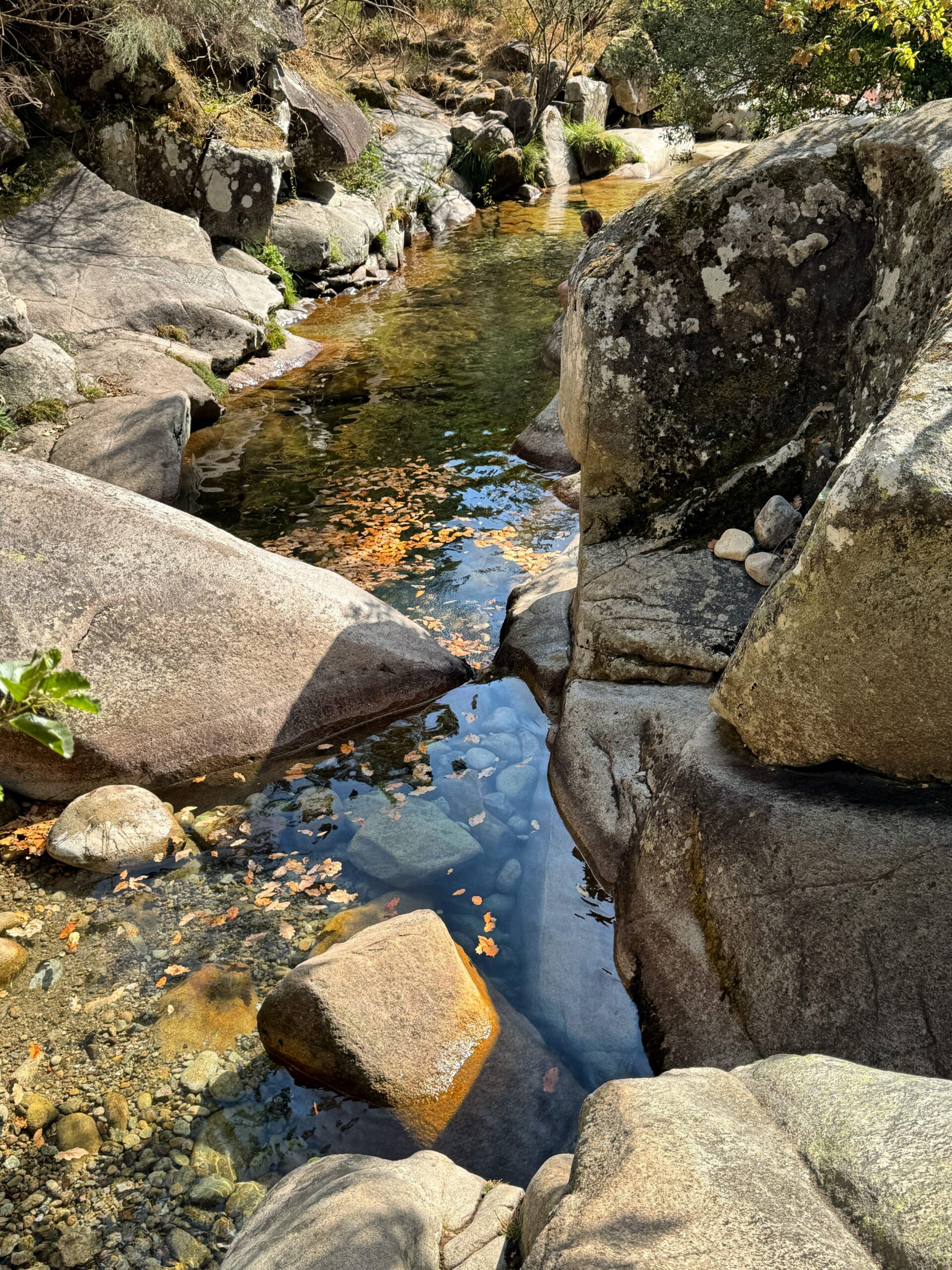





It only takes about twenty-five minutes by car to reach Poço Azul from Tiny Escape, but the time is filled with anticipation. In summer, the anticipation is fun – in winter, it’s wonder. The road winds upward through chestnut groves and granite outcrops, climbing into the folds of the Serra da Arada. The last stretch is by foot, a short descent down a shaded path where you can already hear water whispering through the trees.
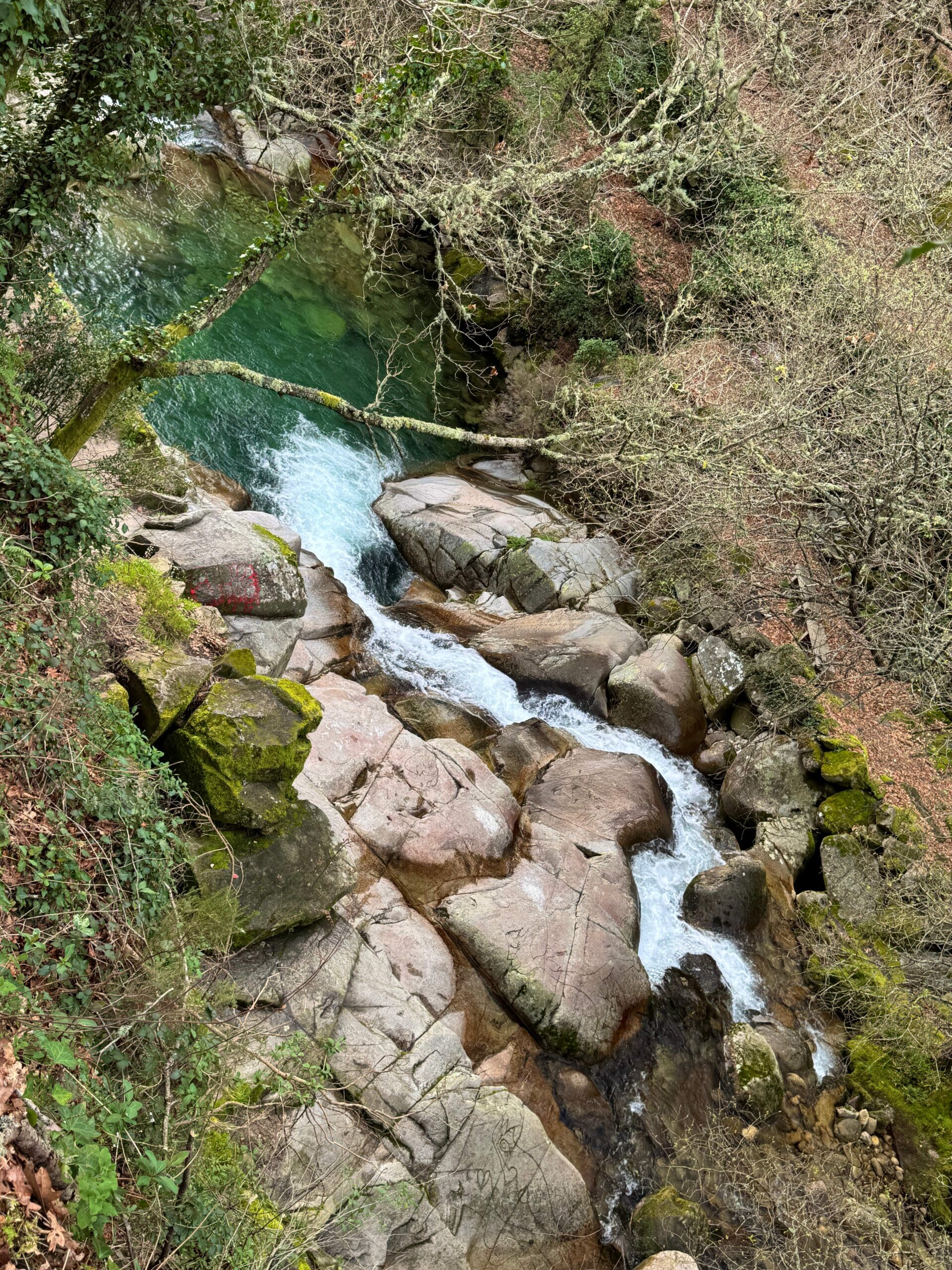
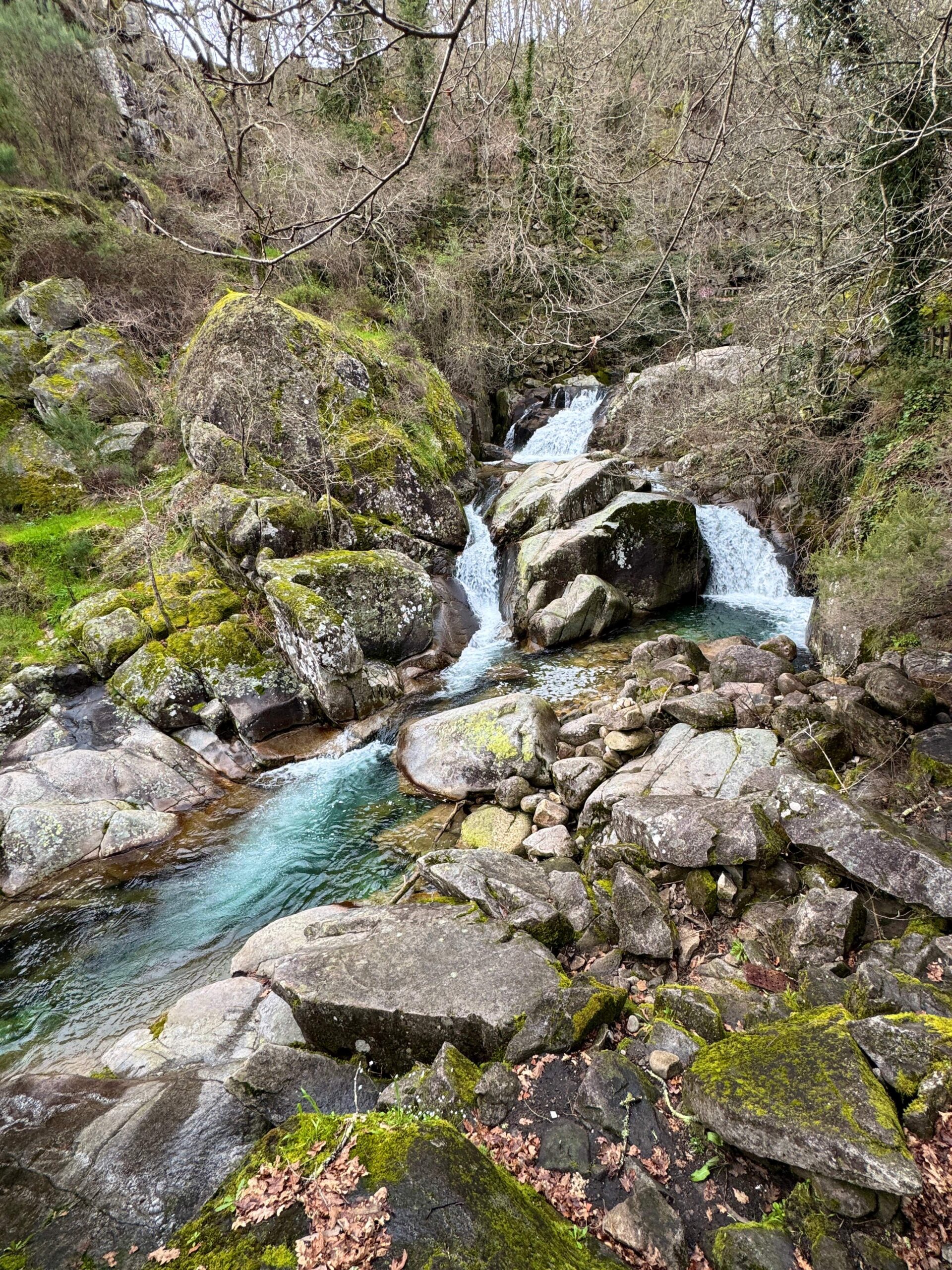
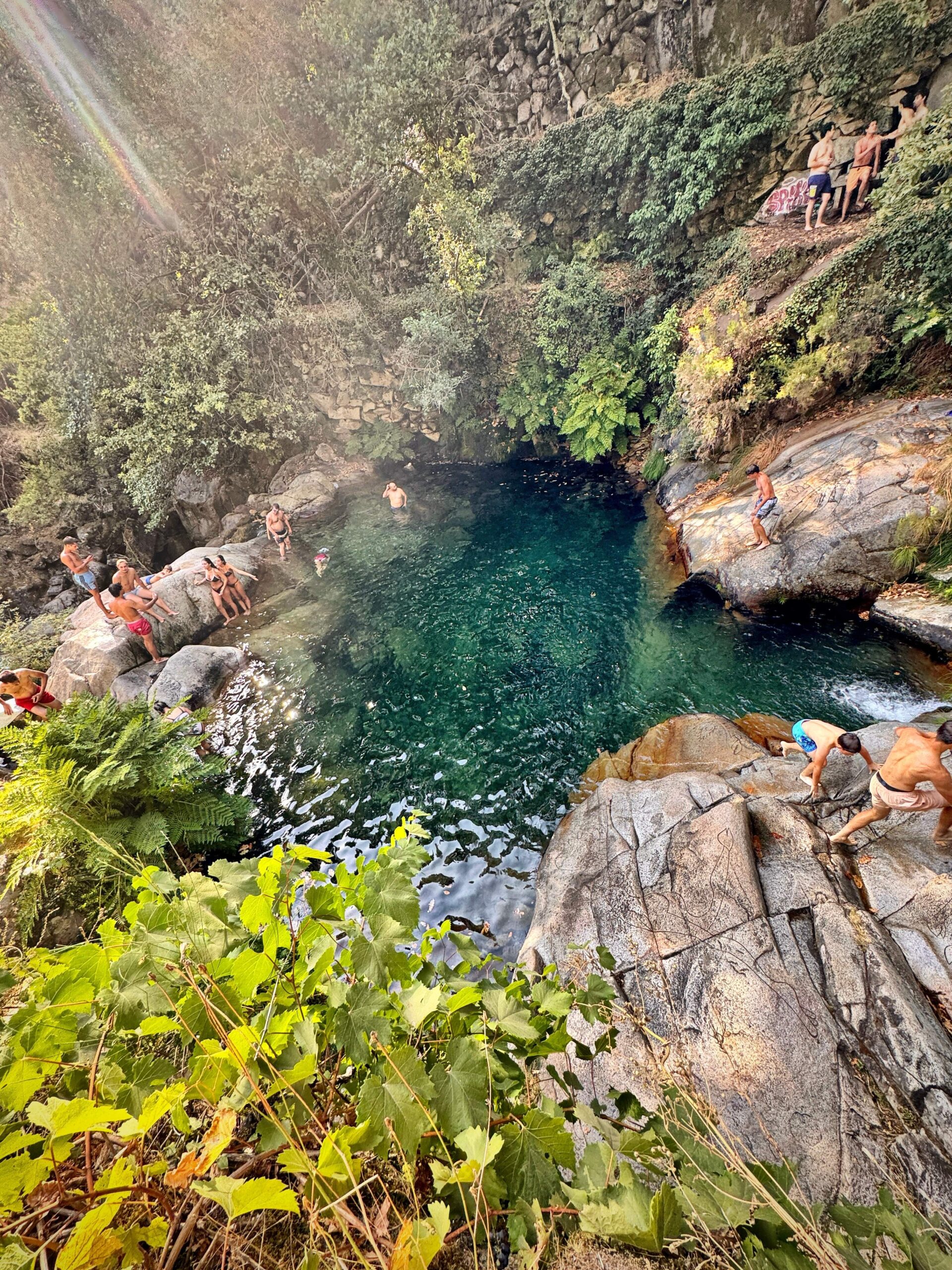
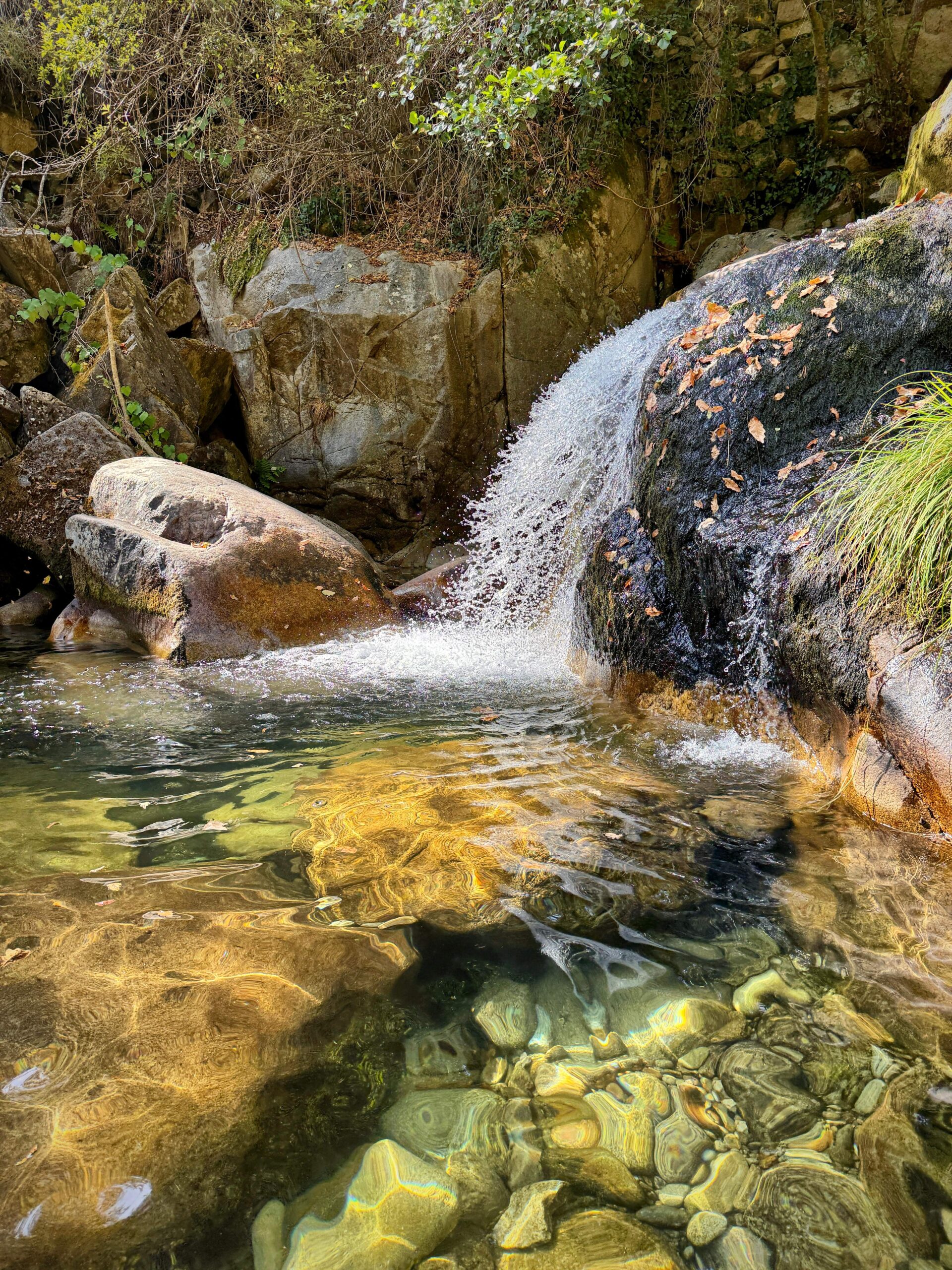
At first, you see nothing. Then, between mossy boulders, a sudden flash — a blue so vivid it almost startles. Poço Azul, “the blue well,” isn’t large, but it’s impossibly beautiful: a series of natural pools and small falls carved into granite by centuries of water. On sunny days, light filters through the trees and sets the surface shimmering in bands of turquoise and emerald. You stand there, blinking, unsure if the color is real.
The Sculptor of Time
This corner of the Arada is built on granite, and the pool’s curves tell the story of time measured not in years, but in millennia. Over ages, the Ribeira da Landeira has worn channels into the stone, polishing smooth bowls and ledges. Each flood season reshapes the contours, each drought exposes a new pattern of erosion. Here, water isn’t just life — it’s an artist, slowly engraving its vision into the earth.
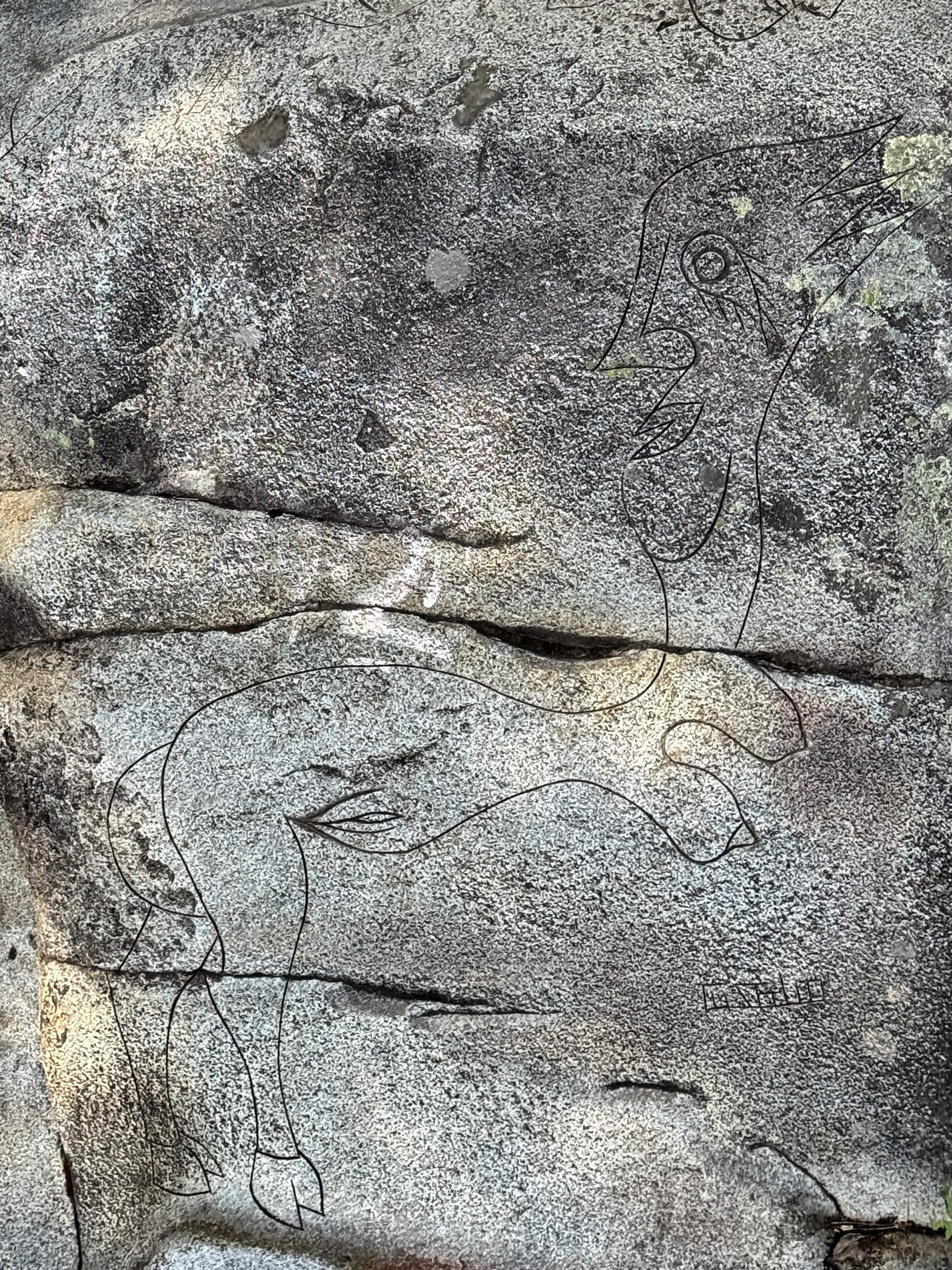
Locals will tell you there are faces in the stone. They’re right. Look closer and you’ll find whimsical carvings of fish, eyes, or abstract shapes — not ancient petroglyphs, though they easily could be. They were made by Custódio Almeida, a local artist who worked the rock decades ago. His work is so subtle, so harmoniously placed, that many visitors mistake it for prehistoric art. It’s a kind of gentle trick — an echo of how nature and imagination blur together here. You can’t always tell where the sculptor’s hand ends and the river’s begins.
A Hidden Treasure
For all its beauty, Poço Azul is still something of a local secret. There are a few signs, but the final descent is unassuming – a small wooden board, a dirt track, a few parked cars half in the grass. You carry what you need, and you carry it back again. That’s how locals like it: simple, respectful, unspoiled.
In summer, the pools come alive. Families gather on flat stones, teenagers dive from ledges into water so clear it seems unreal. The air fills with laughter, splashes, the calls of swallows. The upper basin is the favorite — deep enough for a bold leap, cool enough to make you gasp. Some bring a picnic, some come just to dip their feet, but everyone leaves grinning. There’s something freeing here, a reminder that nature’s best playgrounds don’t need building.
The water stays cold, even in July. Locals will warn you — “é fria!” — but still they dive, shouting, resurfacing with bright eyes. The chill is part of the joy. It’s water that wakes you up, that shocks you back into the present moment.
The Quiet Season
In winter, Poço Azul transforms. The crowds vanish, replaced by mist and birdsong. The river runs faster, its voice lower, steadier. Without swimmers or laughter, the space feels sacred; meant for quiet awe. The blue of summer deepens into steel-grey; moss creeps higher up the rocks. If you sit long enough, you notice the rhythm of drops from a branch above, the smell of wet pine, the slow drift of a leaf across the current.
There’s a kind of intimate silence here in the off-season. It’s not loneliness, exactly — more like the landscape has drawn in a breath and is waiting for spring. You begin to understand why locals keep this place close to their hearts.
The Route of Water and Stone
Poço Azul lies on the Rota da Água e da Pedra — the Route of Water and Stone — a walking circuit that traces streams, cascades, and granite formations across São Pedro do Sul. Following it, you start to see how this region tells its story not through monuments, but through texture and flow. The granite remembers; the water rewrites.
The whole valley is rich with hidden corners: other wells, small cascades, shaded hollows where dragonflies hover. But Poço Azul stands out — not because it’s grand, but because it feels alive. The pool changes with the hour and the season, sometimes transparent, sometimes reflecting sky and forest so perfectly you can’t see where the surface begins.
A Place That Stays With You
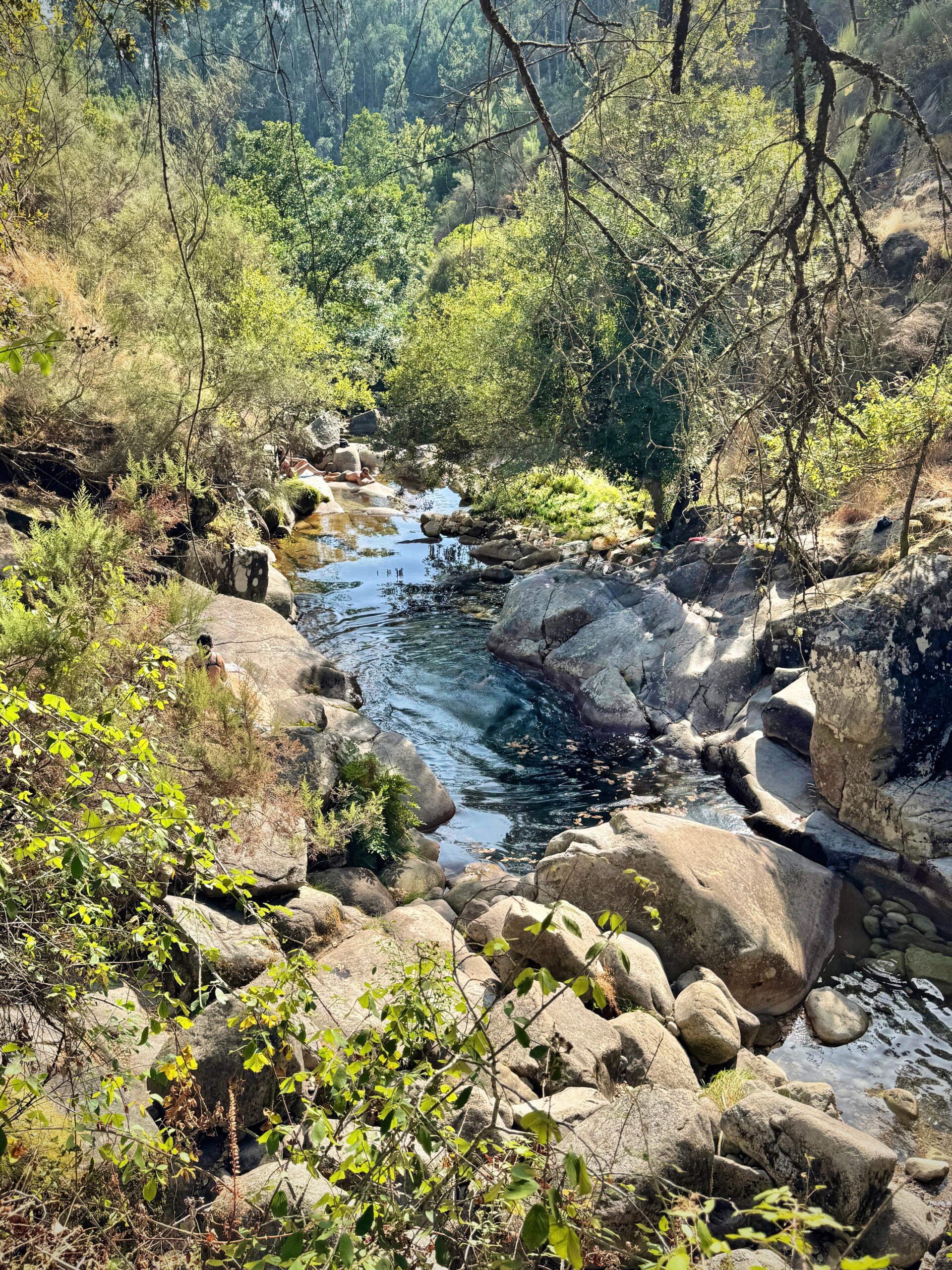
Before you leave, take a moment on the slope above and look back. The river winds away between rocks, disappearing into shadow. The blue gleam fades, then vanishes. In a few minutes, it will feel like a dream.
That’s the gift of Poço Azul: it resists being captured. Photos flatten it, maps barely mention it. To know it, you have to go — to walk down that quiet trail, to listen for the water before you see it, to feel that first shock of cold against your skin.
You might leave shivering, but you’ll carry it with you — the color, the sound, the stillness. A secret known not just by locals, but by anyone who’s ever stood there and thought: this is what blue feels like.