



I want an “authentic” travel experience
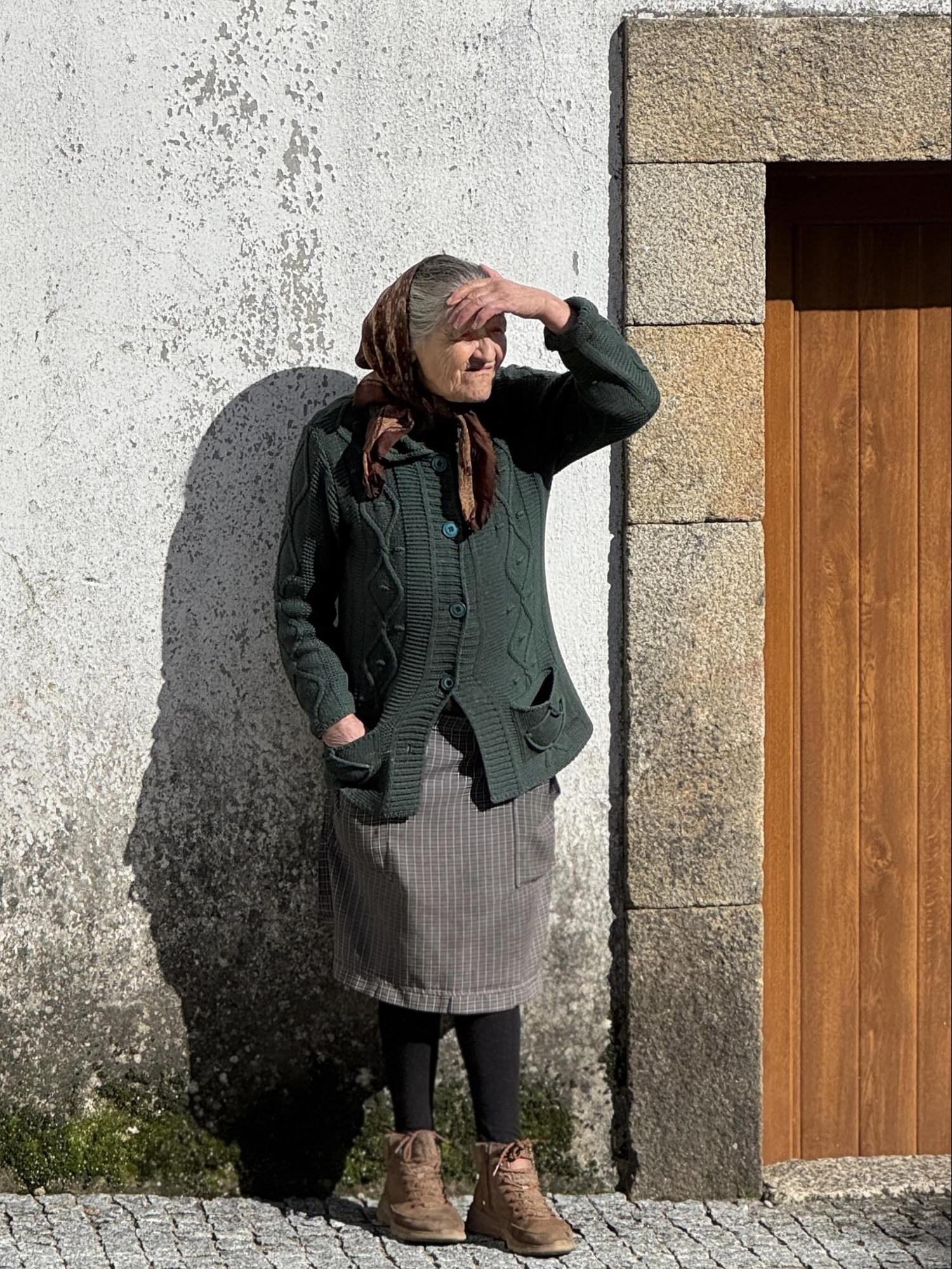
I used to say it a lot. Now that I’ve lived in Portugal for several years, I realize that my previous travels were actually pretty unauthentic. You don’t find authenticity on a Hop-On Hop-Off bus or inside a hotel protected from the culture that you came to experience. It takes effort and context. Maybe most importantly, it takes going somewhere that isn’t performing for you.
So today I’m happy to write about Entrudo de Lazarim; undiluted Portuguese culture without T-shirts or chatty tour guides. Luckily, it also happens to be less than an hour from Tiny Escape.
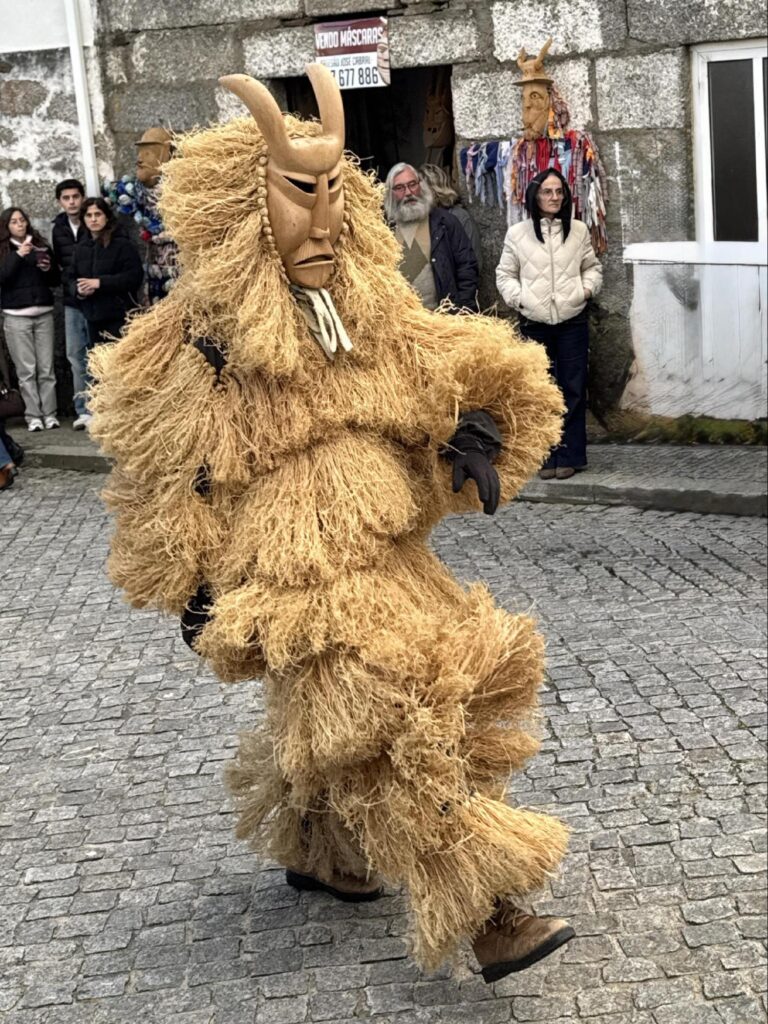
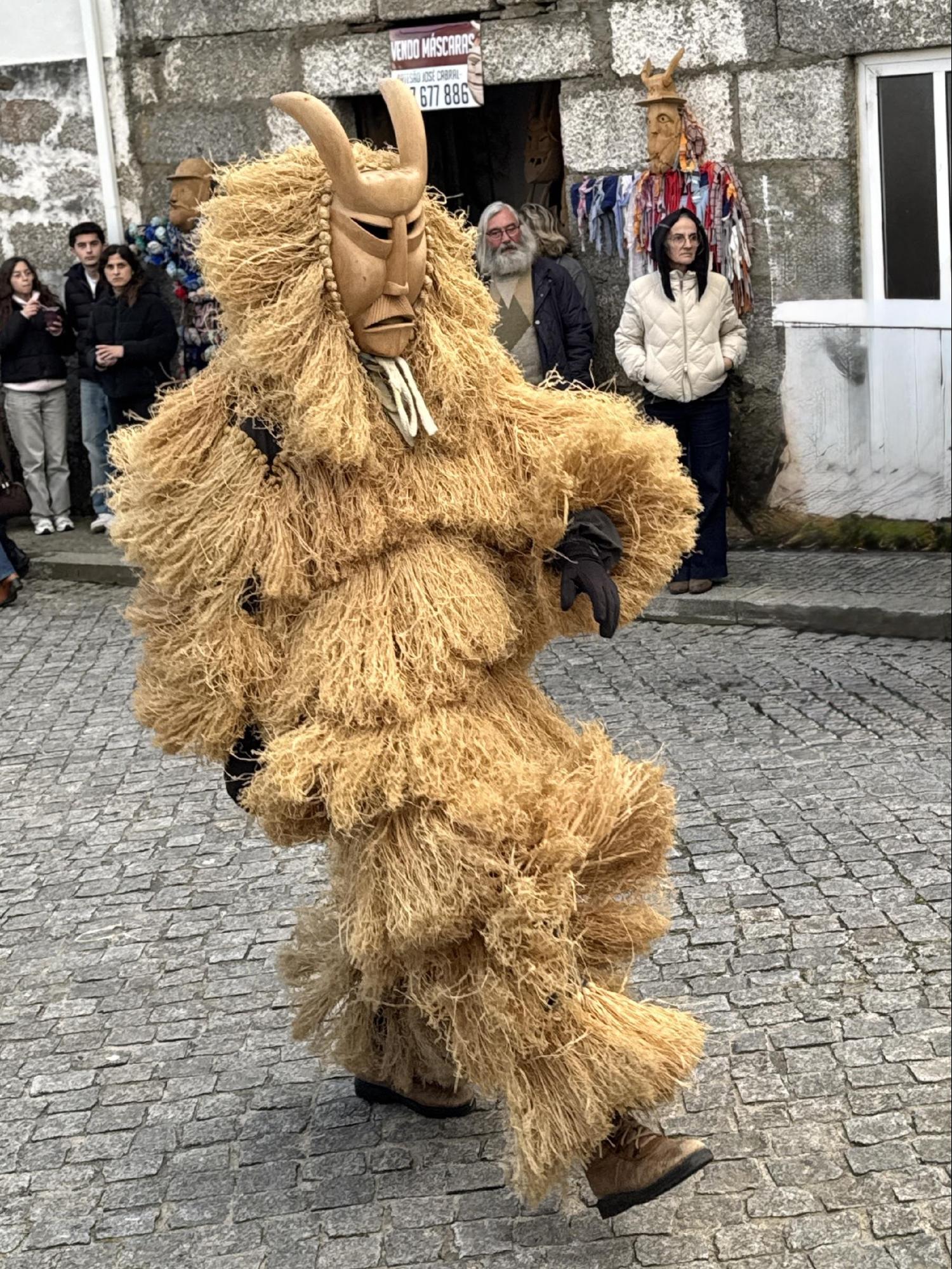
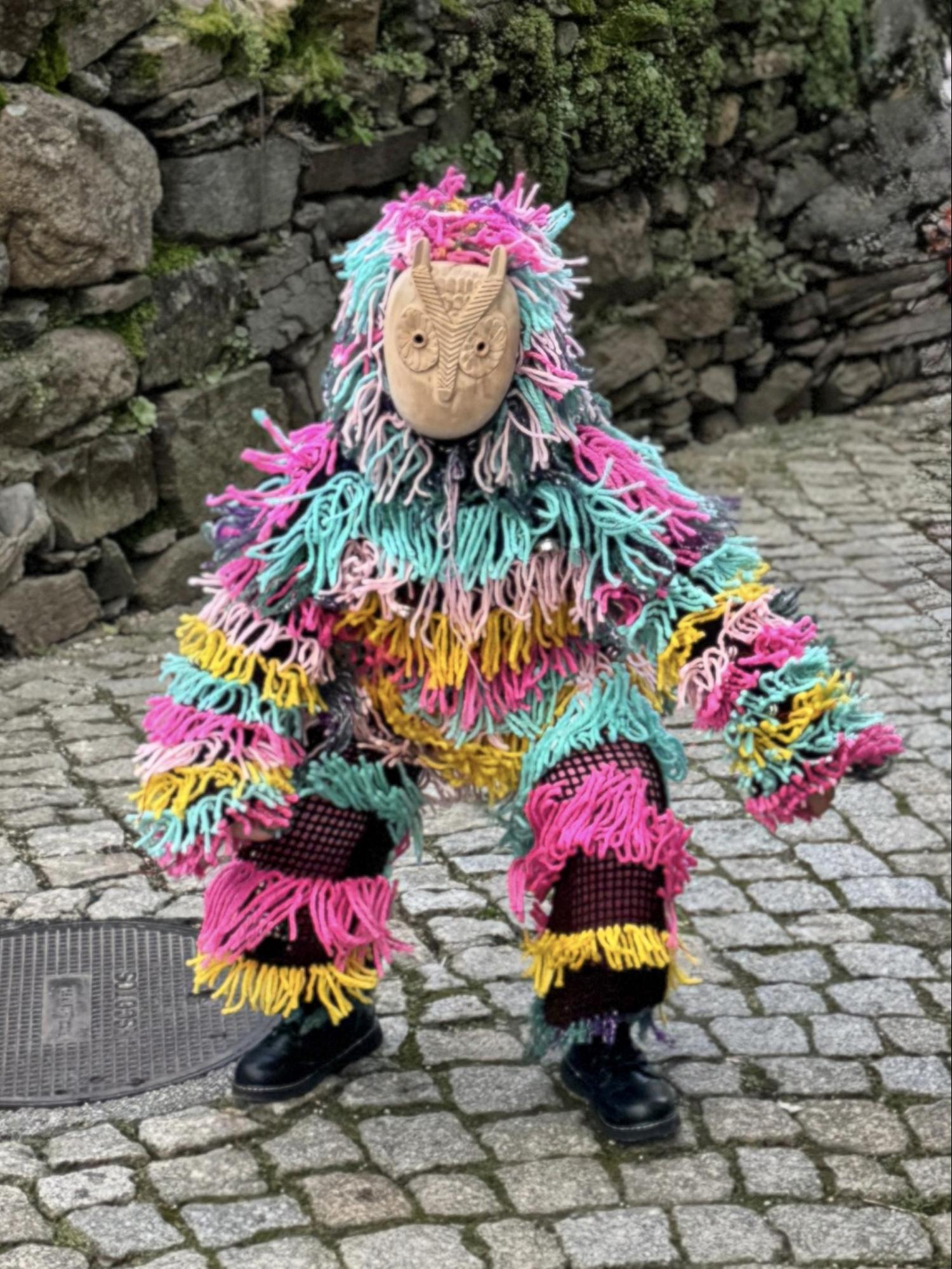
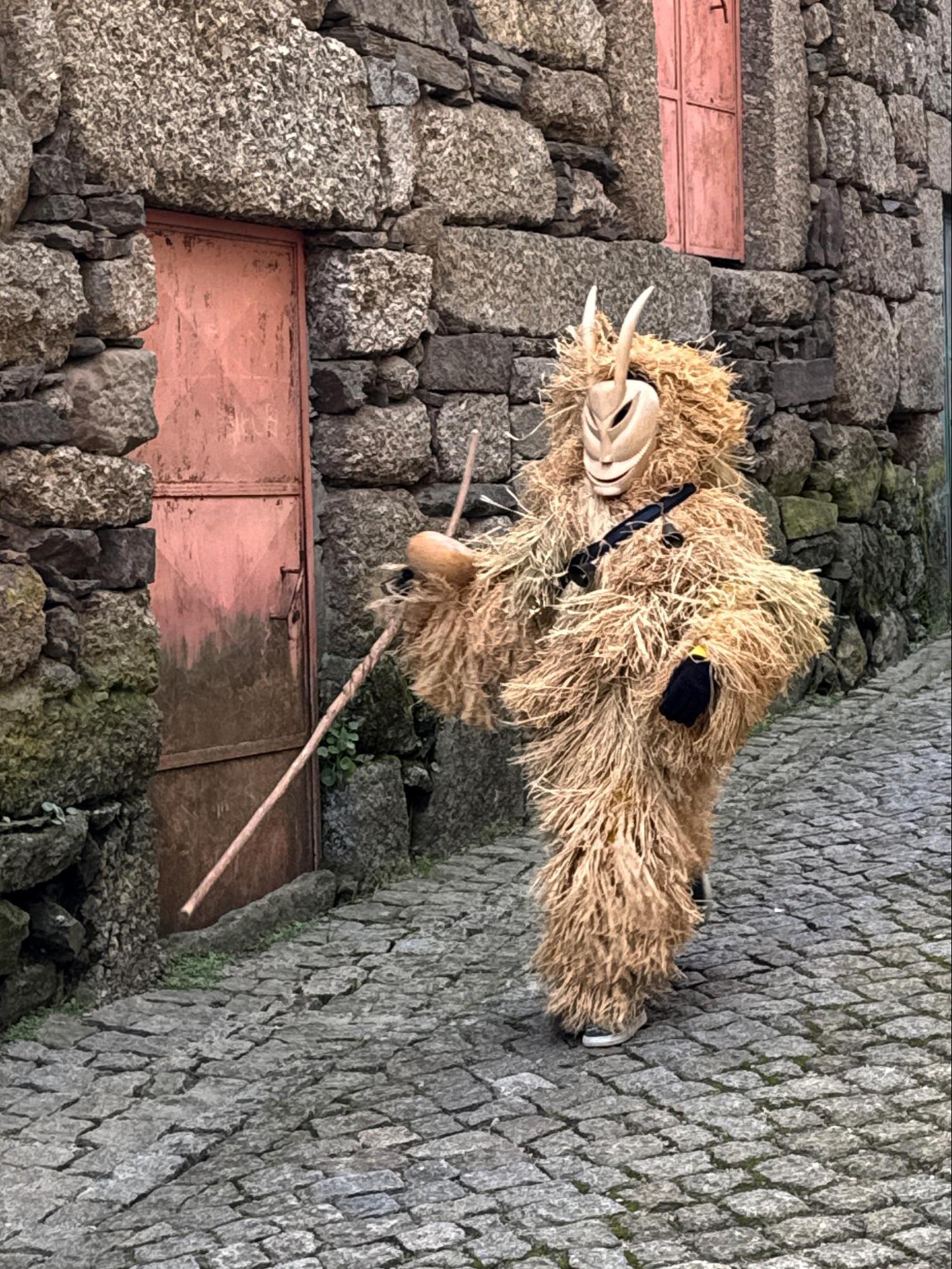
Entrudo is an ancient Portuguese word for Carnival. In New Orleans they throw beads. In Brazil they dance the samba. In Lazarim, they wear hand-carved masks, tease their neighbors, party together and dance to burning effigies in the village square… all to a great beat.
The origins are unknown and its common to say it has pagan roots. The emphasis on seasons, harvests and fertility make it a pretty compelling argument. Although these elements may have been local pagan activity, Entrudo belongs squarely to the medieval Christian calendar. Whatever its beginnings, it predates Carnival in the Americas by centuries. Portugal has catalogued the festival in its inventory of national intangible heritage and they await UNESCO recognition.
“We don’t refute what tradition imposes.”
In the Lazarim mask museum (the CIMI) there’s a video of locals discussing the significance of Entrudo. The sentiment is, “I don’t just attend it — I am part of it because we don’t refute what tradition imposes.”
While watching the video I realized that Entrudo is truly unique. It wasn’t contrived to make money. It is a medieval and deeply personal ritual that has sustained the village through conflict and uncertainty for hundreds of years.
Ok, so what is it?
Entrudo is a four-day festival leading up to Ash Wednesday. There is always a published agenda but there are four elements:
1. Mascarados Mayhem - The Masked Ones
Entrudo begins with mascarados roaming the streets. Anonymity allows you to do things you wouldn’t otherwise dare and, in the past, it could get a little rough. Behind a mask after a little wine, old grudges could bubble up and spill out onto the street. But mostly it was about having fun and flirting in ways that would normally be discouraged.
Today’s festival is still cheeky but good-natured. The antics are funny, the flirting is harmless and the tussling is light-hearted. There is a sweetness to it like… well, a small-town carnival.
2. Celebration
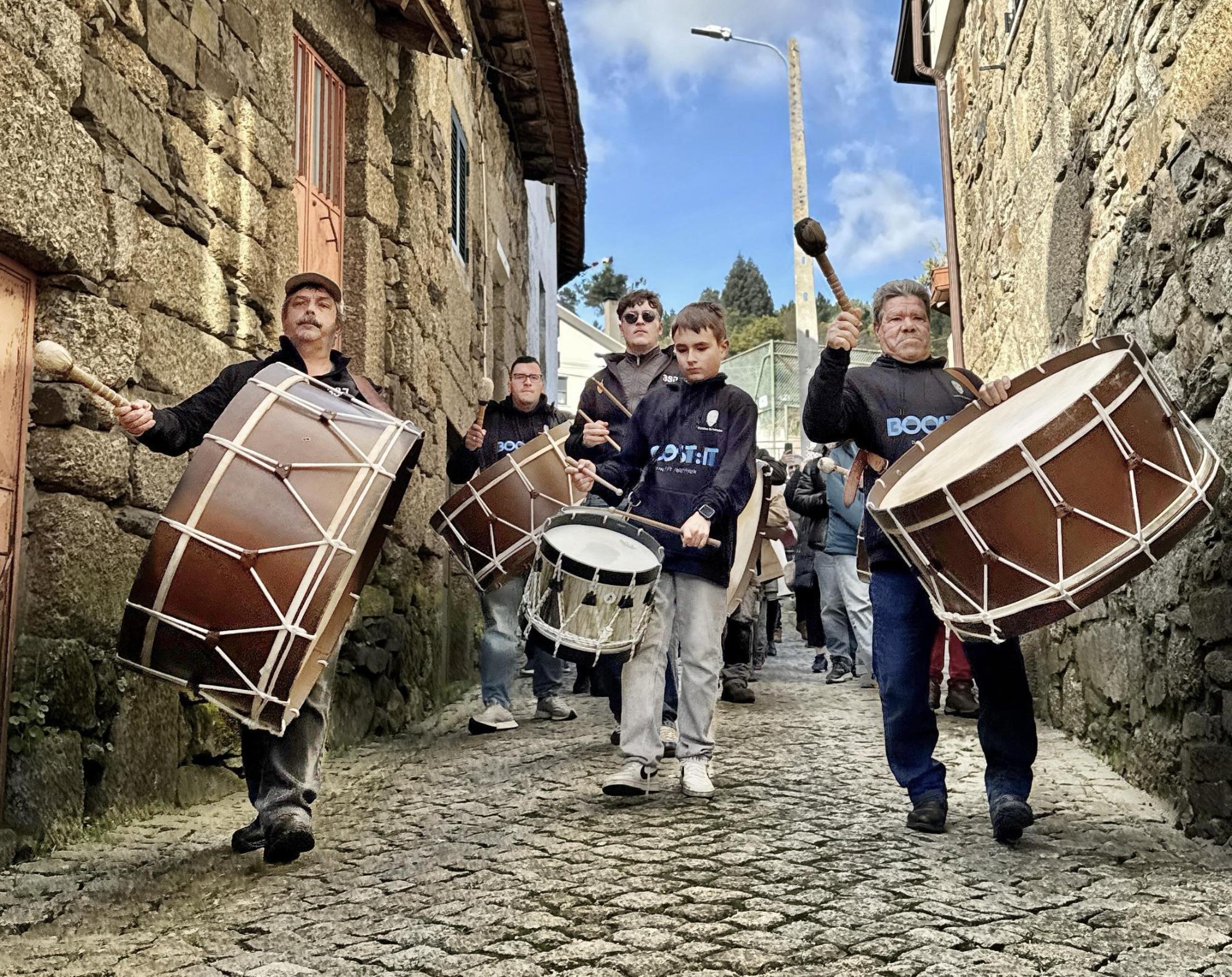
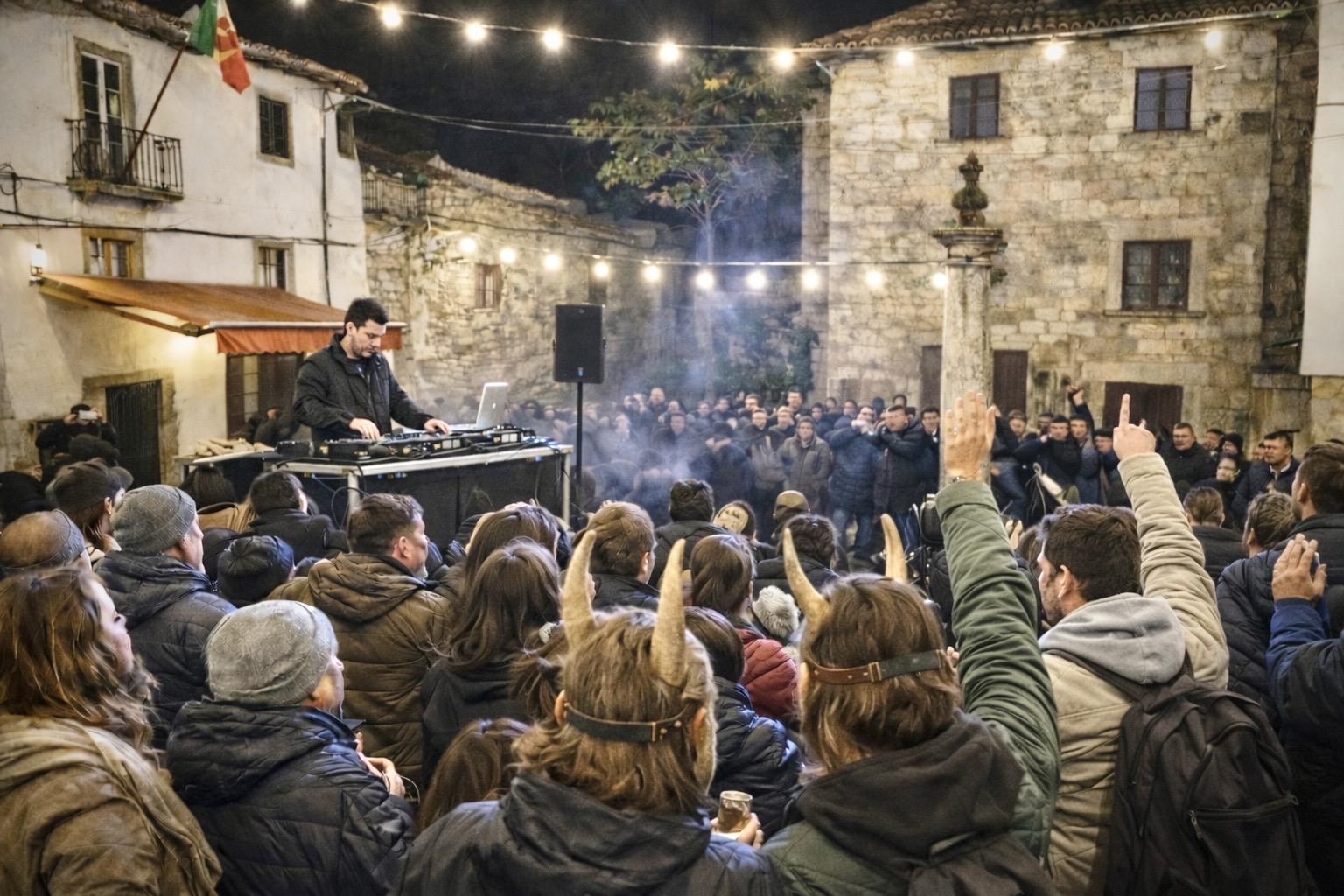
Entrudo is one of the few times that Portuguese restraint disappears. The music gets loud. Live music and DJs keep people dancing late into the evening. People who are normally quiet become boisterous.
3. Hospitality
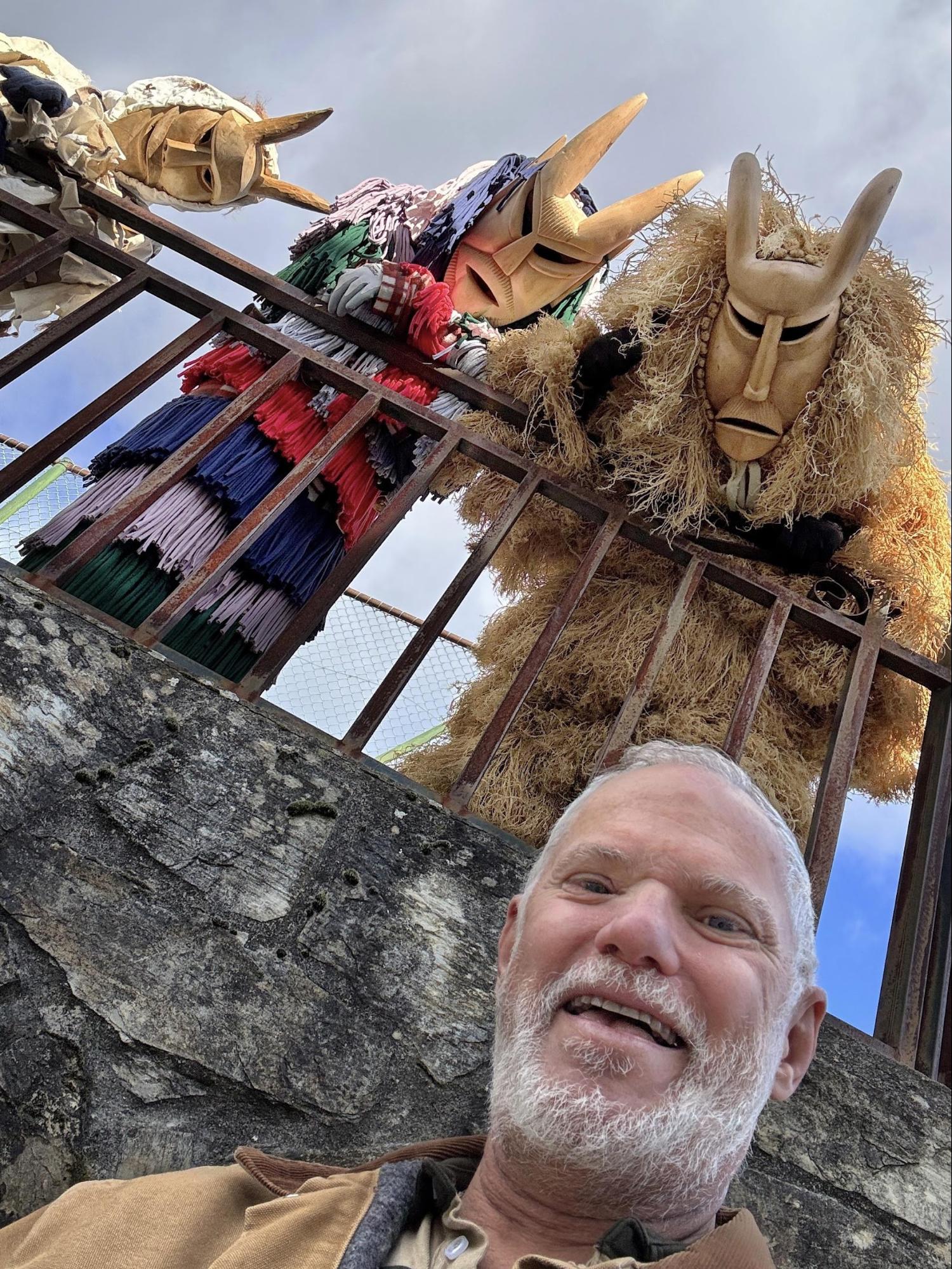
Mascarados are genuinely friendly and welcoming. They will pose with you and even fight with each other to be in your selfie. But it goes beyond that. Villagers consider hospitality a verb.
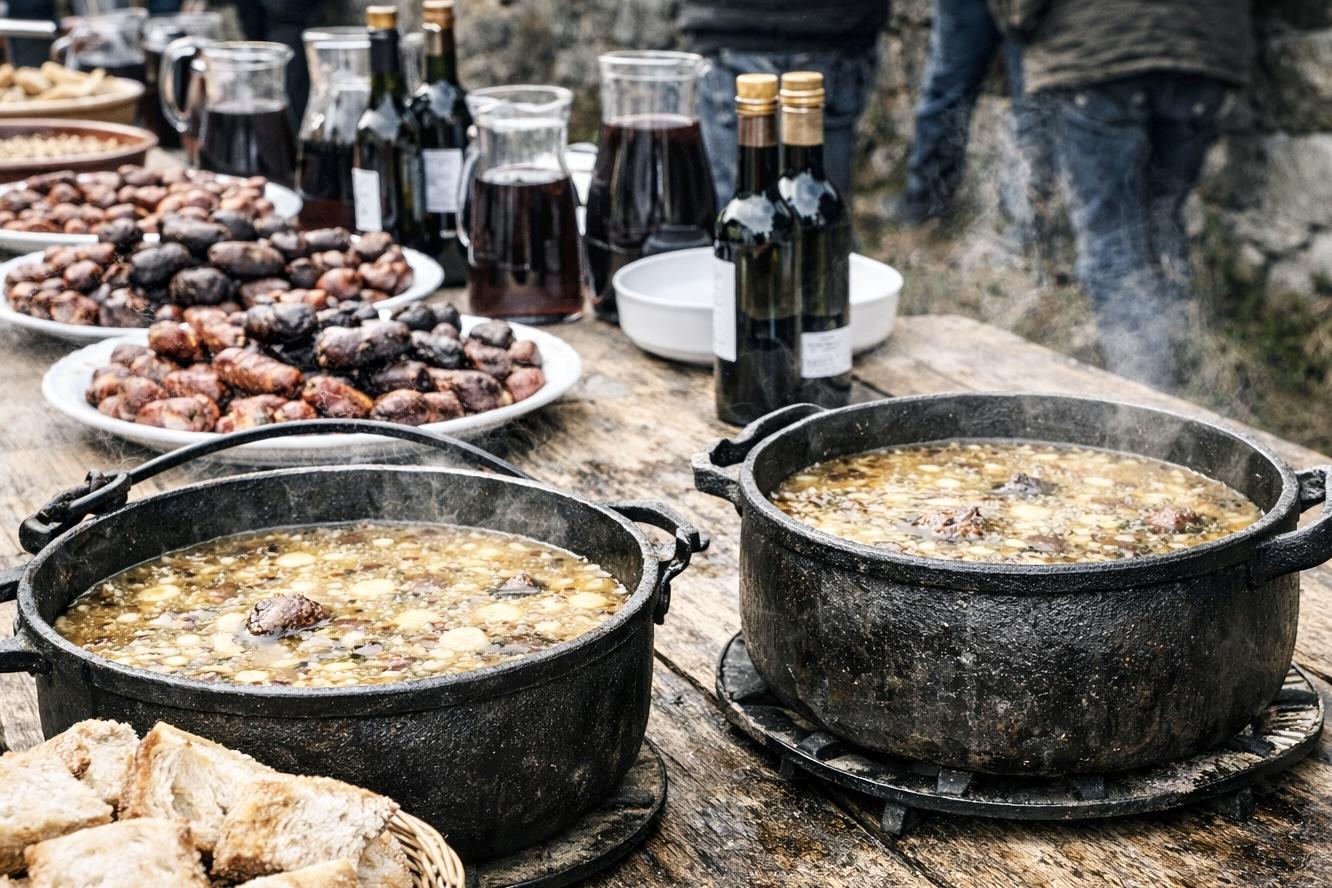
At the end of the festival, Lazarim offers guests a bowl of Caldo de Farinha e Vinho — flour-thickened soup, bread, sausage, and wine. The soup is cooked in large iron pots and handed out to whoever is there. No cash. No wristbands.
4. Ritual
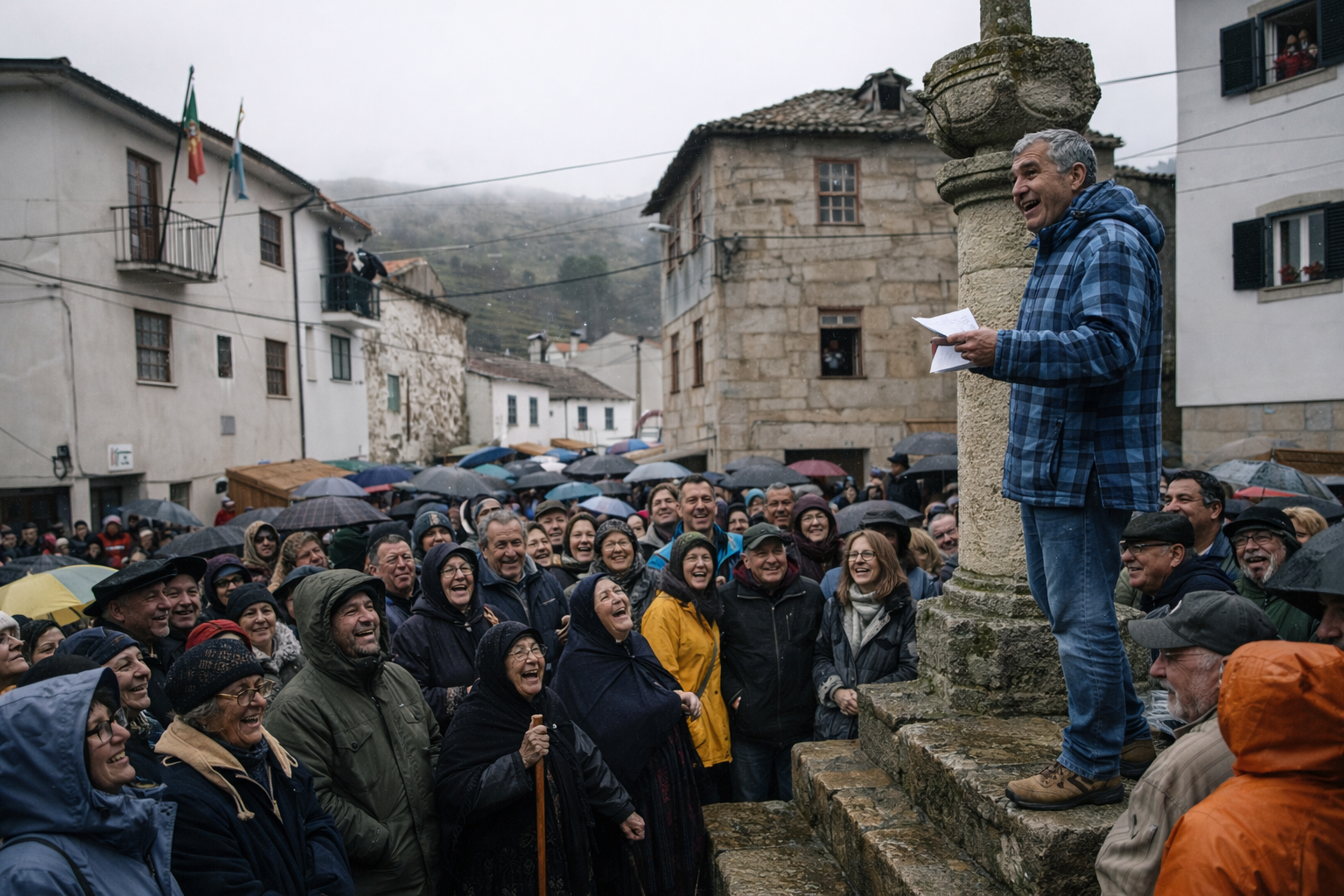
There are two important rituals that close Entrudo. First: there is the reading of the wills (testamentos). They aren’t actually wills. They are personal and political satire. It’s like the Festivus, “Airing of Grievances” from Seinfeld. If the gossip is that João has been unfaithful, someone might say, “And to João, who knows the path to every door he shouldn’t open, I leave my keys and my excuses.” It’s funny but direct. Their way of calling it out, letting it go and moving on.
Second: there is the burning of the Compadre and Comadre (effigies of a man and woman). It’s loud now and dramatic. The Burning Man festival might think it’s avant-garde, but Lazarim has been doing it for centuries – no marketing machine required. Even better, everyone here knows each other and has shared the same ups and downs of the previous year. It is simultaneously release and closure. The next day they begin anew.
Mascarados masterpiece
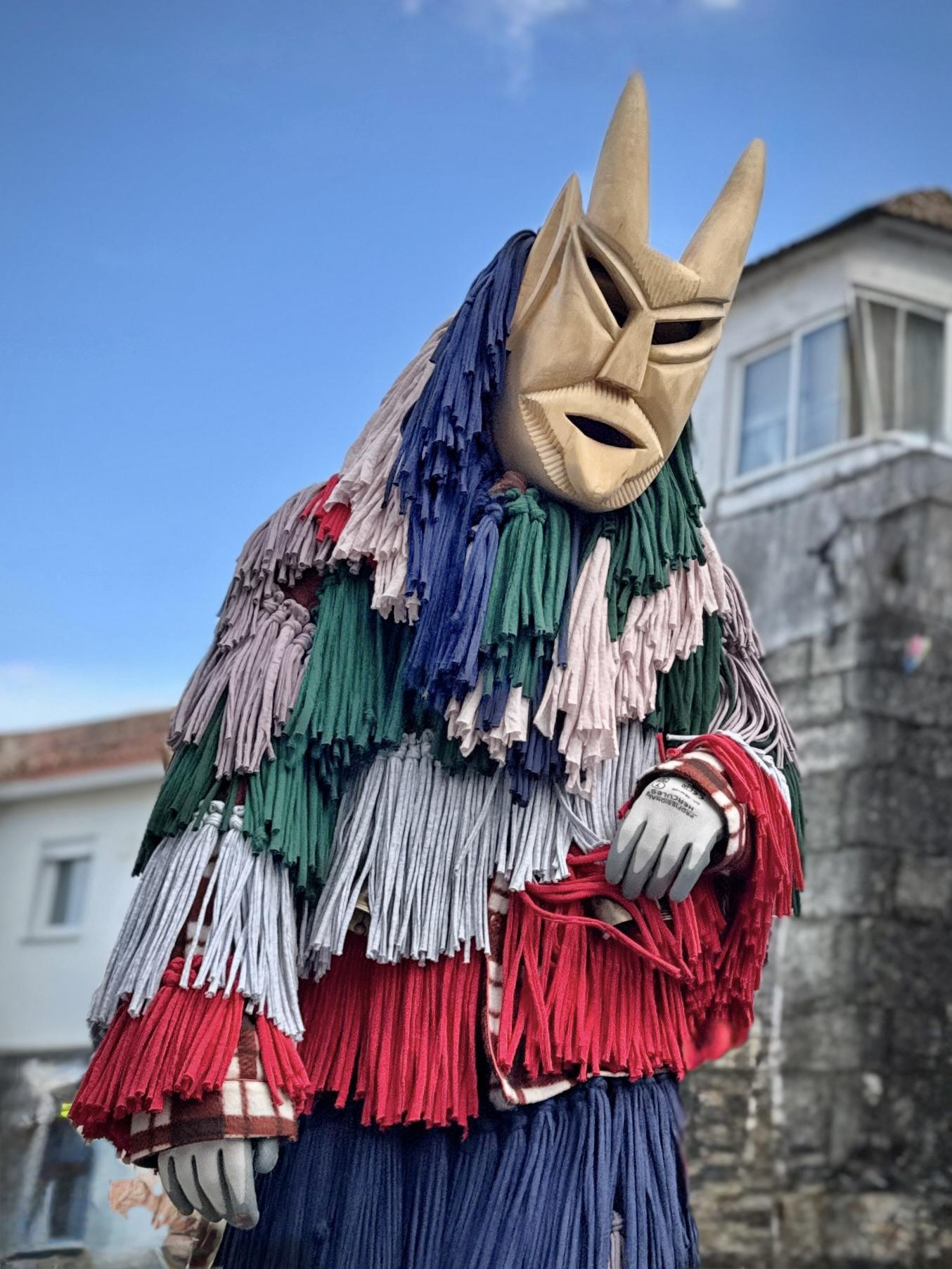
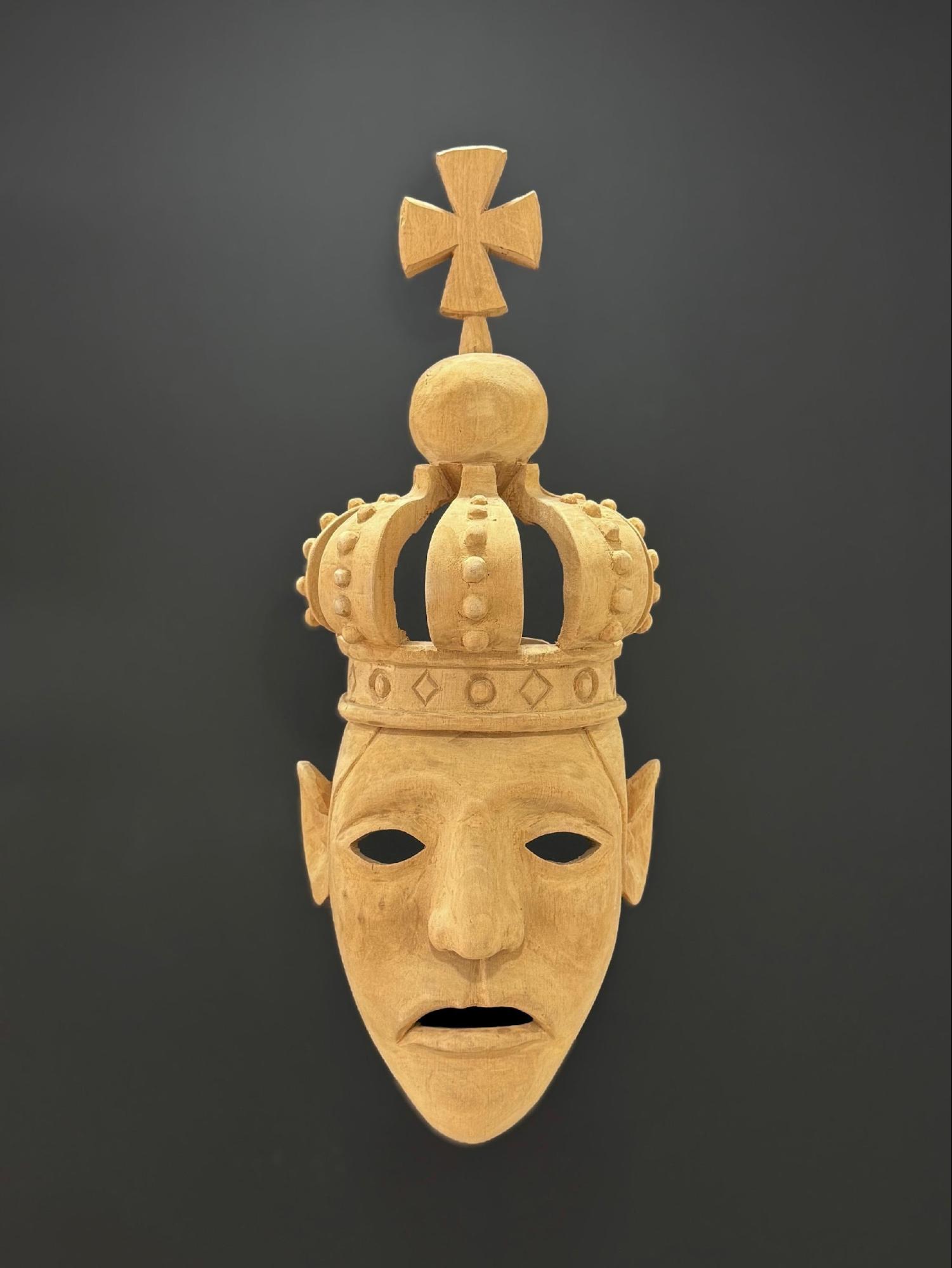
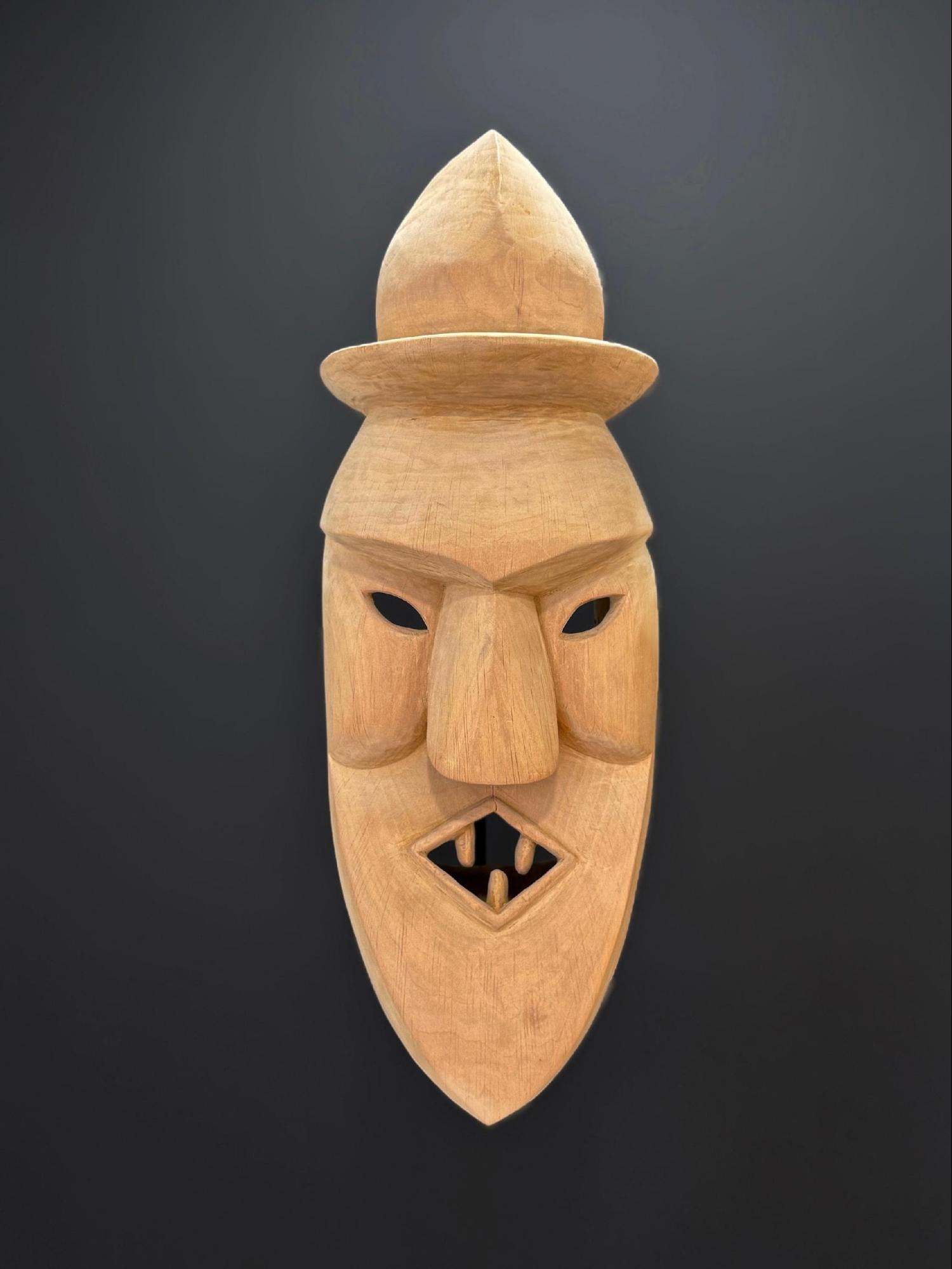
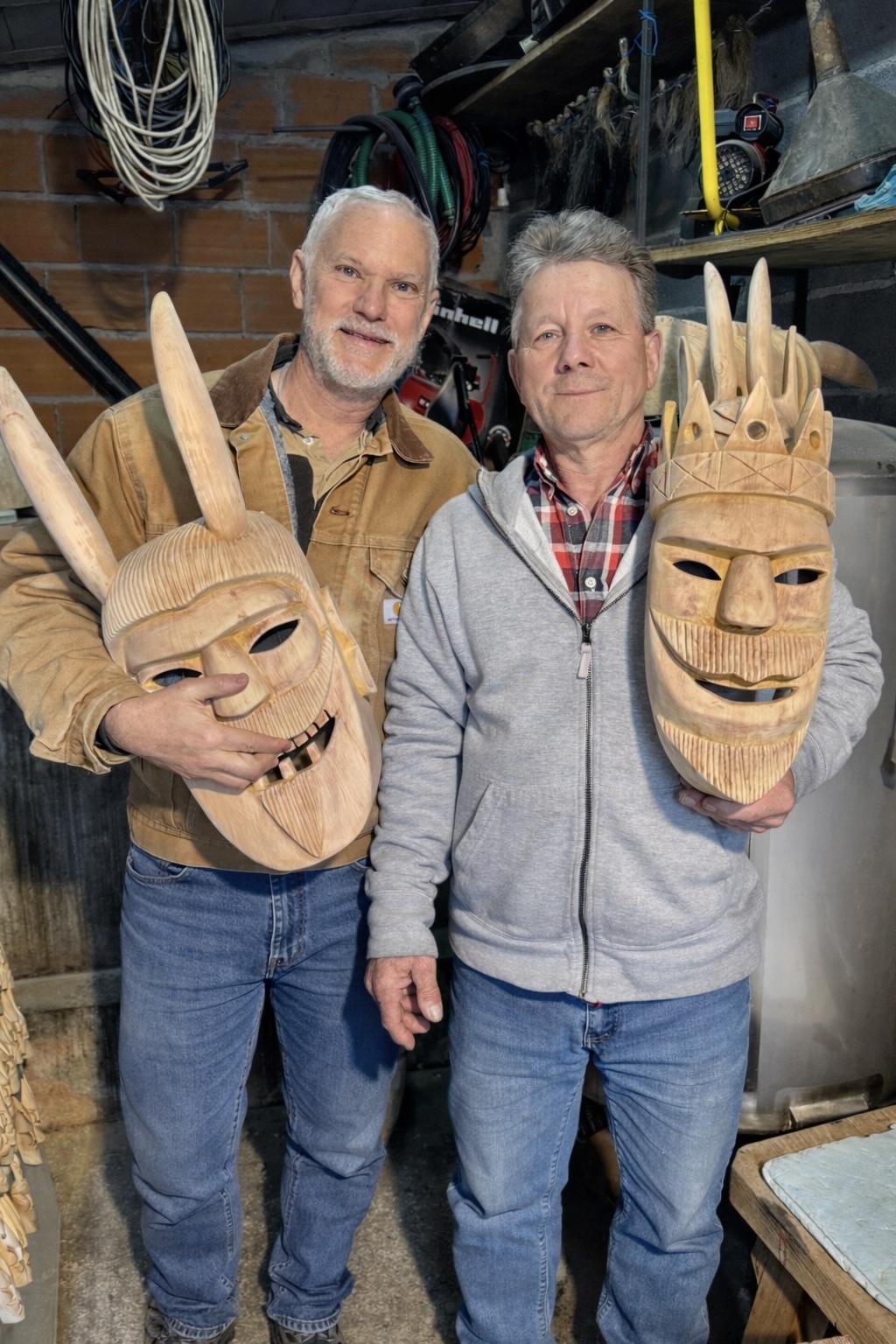
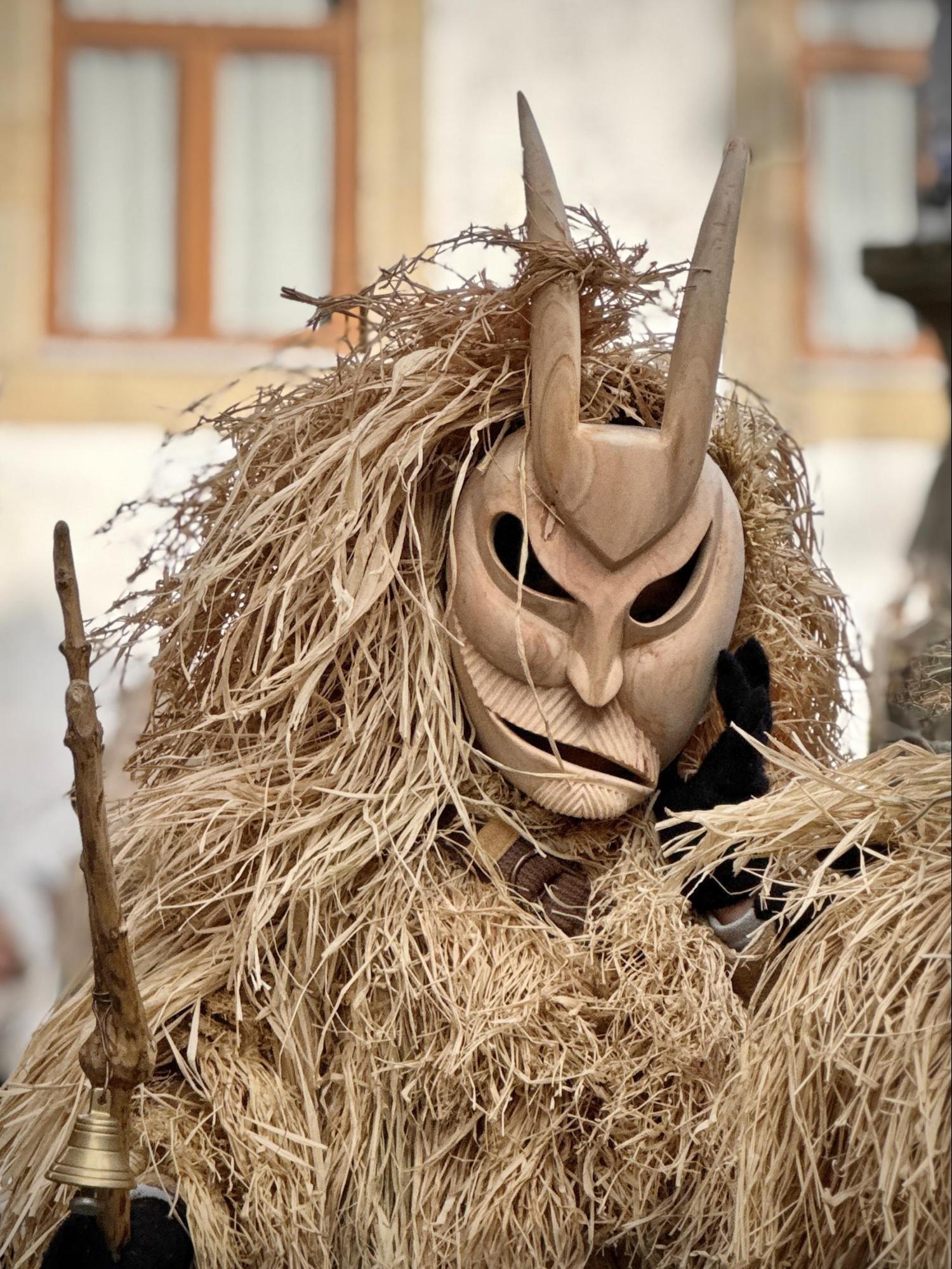
Over centuries, the masks have evolved from bandit-style cloth coverings to gorgeous wooden works of art made almost exclusively from Alder trees. They become family heirlooms and getting your first mask is a rite of passage.
The king mask that we have in our Tiny Escape Portugal home was crafted by José Ferreira Cabral (on the right), one of the town’s master artisans. It is one of our favorite artifacts on the property.
The tradition that defied a dictator
One final note about the Entrudo. António de Oliveira Salazar was Portugal’s dictator from 1932-1968. His 36-year reign kept Portugal socially and politically restrained and isolated for a generation. Not surprisingly, the mayhem and political satire of Entrudo did not sit well with his regime. Mascarados were arrested and imprisoned in Lisbon until villagers could pay outrageous fines. While it became smaller during those years, it lived on. Salazar misread Lazarim’s resilience. They refused to refute what tradition imposes.
Entrudo is a lot of fun but it is also so much more. It is ritual that sustains the community and will continue regardless of dictators and even tourists. To me, that is as authentic as it gets.
Why we think you’ll love it
- It is rare to be a welcomed outsider to something so real
- Less than an hour from Tiny Escape
- Wild, funny, and unforgettable
- Extraordinary masks and costumes
- Lazarim is a village that brings hospitality to life